

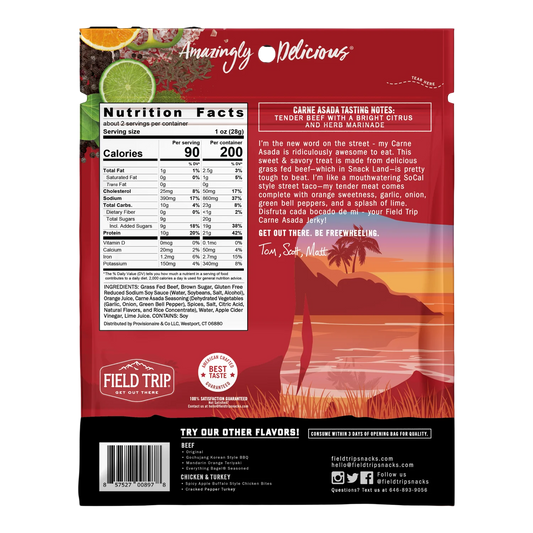

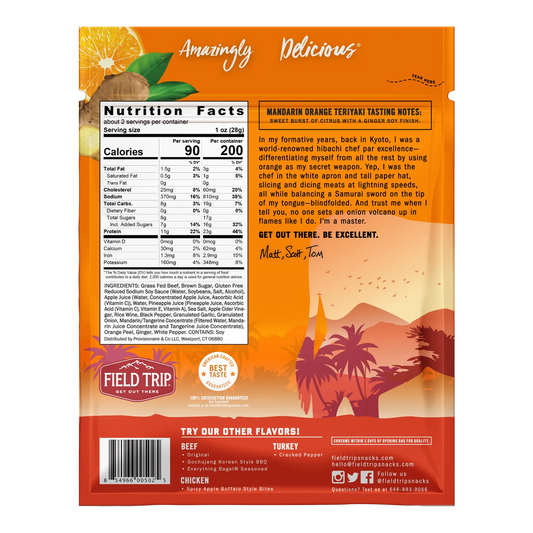

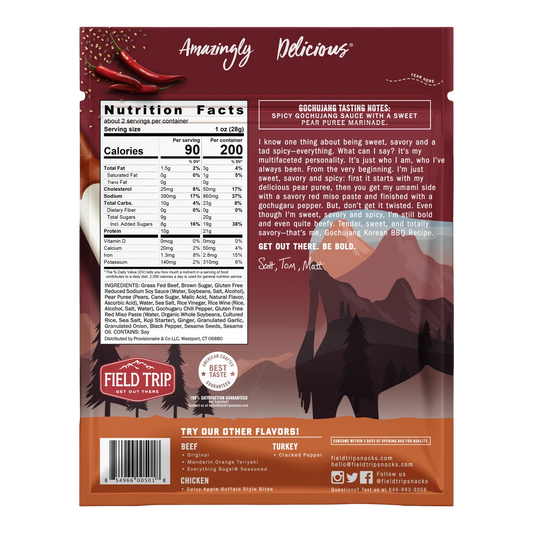

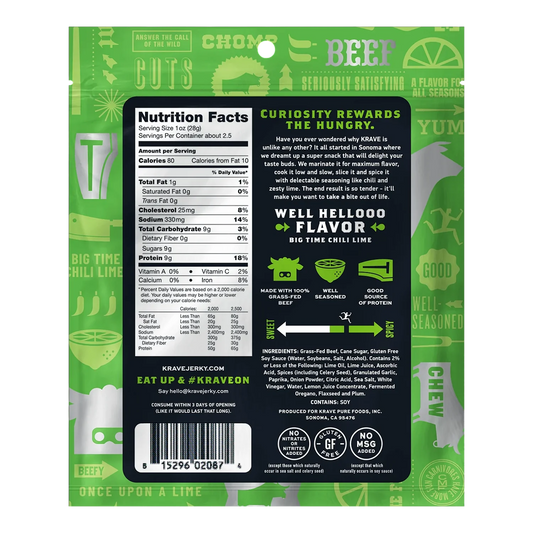






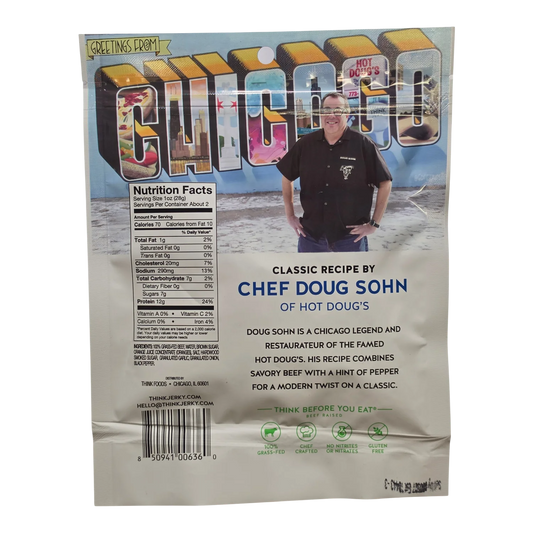


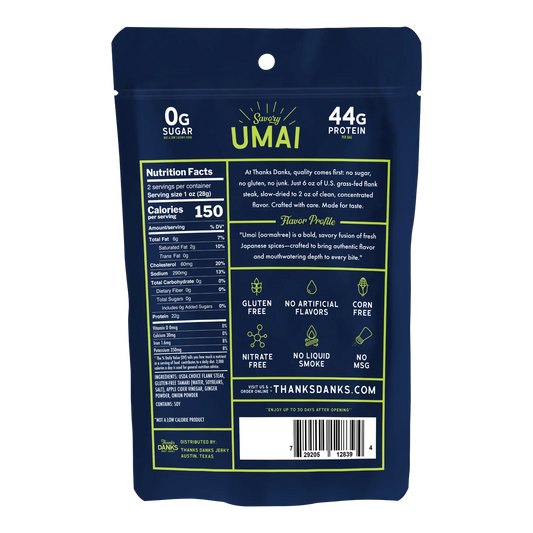

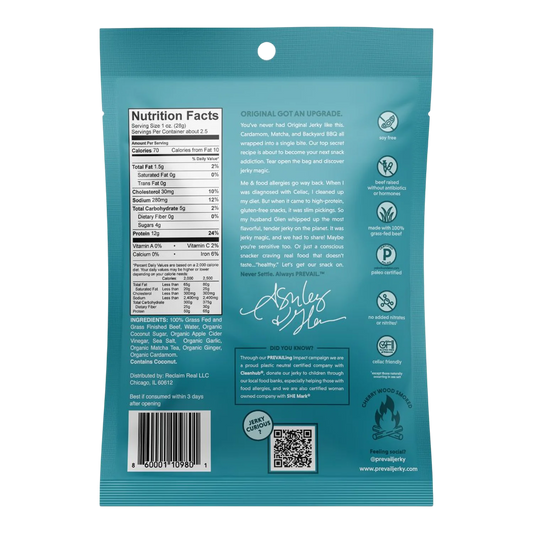

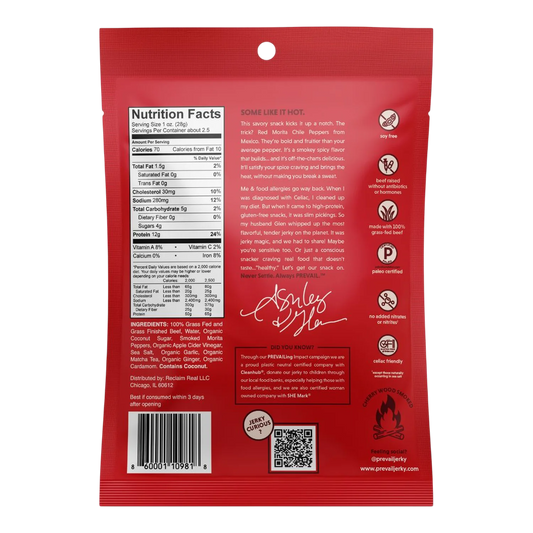

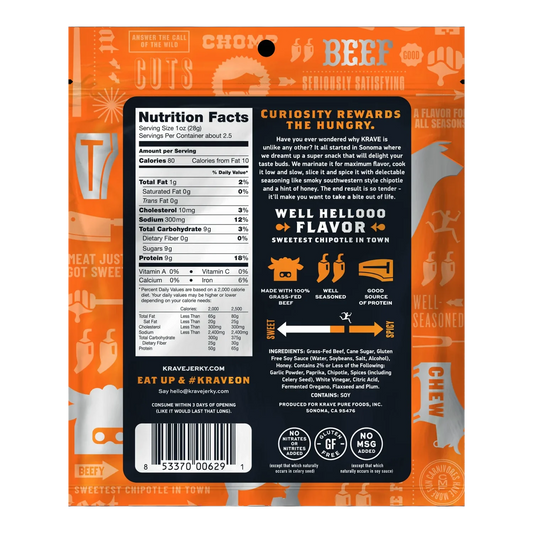

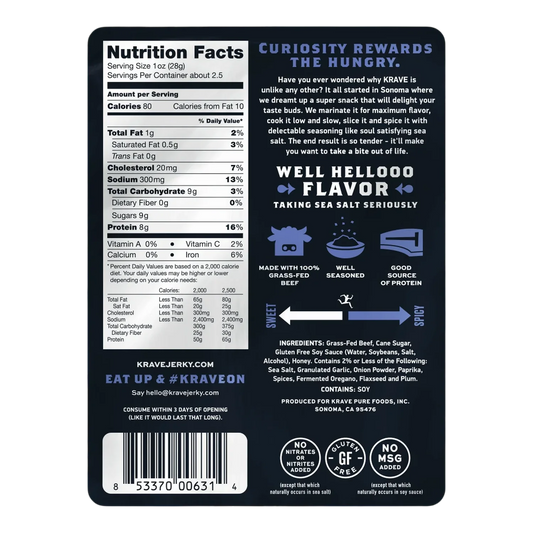

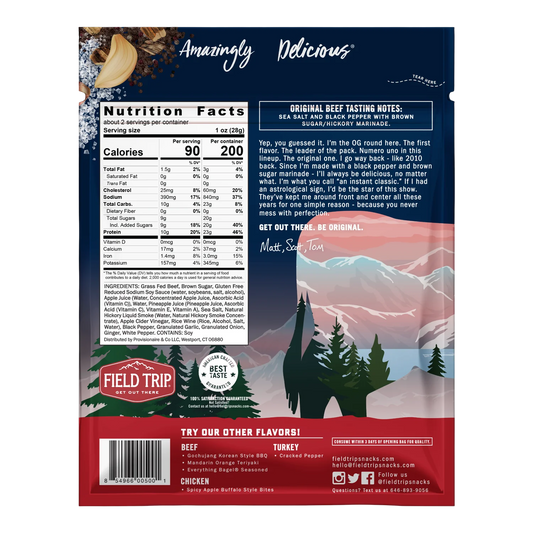

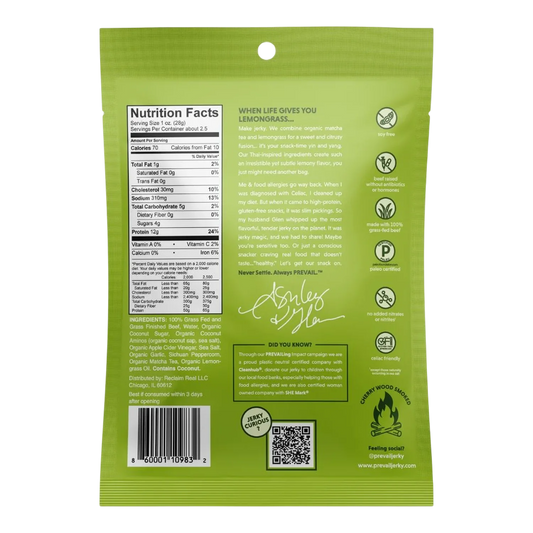

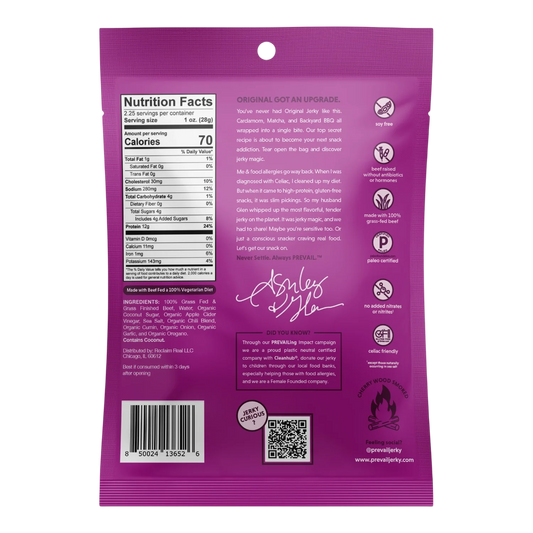

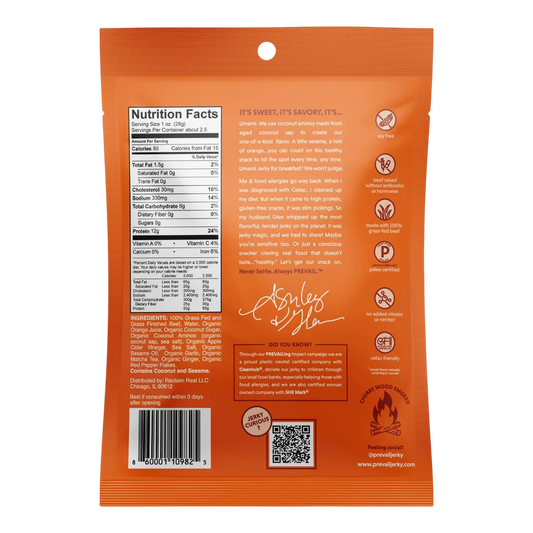
Grass-fed jerky starts with cattle raised on pasture and forage rather than a grain-heavy feedlot diet, and that single difference in how the animal ate shows up later in the flavor and character of the finished snack. It has become one of the fastest-growing corners of the jerky aisle for shoppers who want a premium meat snack with a clearer story behind the beef, whether that means a more pronounced, grass-forward taste or simply a sourcing claim they can point to on the bag. JerkyBrands has pulled grass-fed beef jerky as well as other grass-fed meat snacks from independent makers across the country into one collection, currently featuring 24 products spanning different brands, cuts, and styles. Nutritional and sourcing details still vary by product and producer, so read the label on whatever catches your eye rather than assuming every bag marked "grass-fed" follows the same rules.
Shop Grass-Fed Jerky Online
This collection gathers grass-fed beef jerky and grass-fed air-dried beef from a range of independent brands, each with its own take on cut, preparation, and seasoning. Instead of hunting across a dozen individual brand sites and paying separate shipping on each one, you can browse traditional jerky, air-dried styles, and specialty recipes side by side and compare them in a single cart. That distinction matters because two products both labeled "grass-fed" can differ meaningfully in texture, flavor intensity, and finishing method, and seeing them side by side makes those differences easy to spot. Premium and small-batch options appear throughout the lineup alongside more familiar recipes, so you can experiment without giving up the classics.
What Is Grass-Fed Jerky
Grass-fed jerky is dried and seasoned beef made from cattle whose diet consisted mainly or entirely of grass and other forage. Before getting into flavor and nutrition, it helps to separate a few terms that people use interchangeably in casual conversation, but that mean different things on a label.
What Does Grass-Fed Mean
"Grass-fed" describes what the cattle ate, not how the meat was processed or seasoned afterward. Cattle raised this way graze on pasture or eat stored forage such as hay, rather than being moved onto a grain ration to speed up weight gain. The U.S. Department of Agriculture's Agricultural Marketing Service (AMS) once operated a formal Grass (Forage) Fed Marketing Claim Standard that producers could use to verify the claim, but the agency withdrew that standard in 2016 after determining it fell outside its statutory authority. Today, the USDA's Food Safety and Inspection Service reviews grass-fed claims on packaging to confirm they’re truthful and not misleading, and producers may still rely on private grass-fed standards or the agency's Process Verified Program to back up the label. None of that means every grass-fed product is nutritionally identical. It means the diet claim itself has a specific definition, and everything else, including finishing method and overall nutrition, depends on the individual producer.
Grass-Fed vs Grain-Fed Beef
The difference between grass-fed and grain-fed cattle comes down to what happens in the months before harvest. Grass-fed cattle graze or eat forage for their entire lives, while conventionally raised, grain-fed cattle typically graze for a period and then move to a grain-based diet to finish, which speeds weight gain and tends to increase marbling. According to Pennsylvania State University Extension, that grain-finishing period is also why grain-fed cattle more often reach the Choice and Prime quality grades that carry premium pricing, since grass-fed animals rarely marble to the same degree. Shoppers who prefer grass-fed beef are often drawn to the leaner profile and the more pronounced, earthier flavor that comes from a forage-only diet, while others prefer the richer marbling and milder taste that grain finishing tends to produce. Neither is objectively better; they’re different products built around different feeding philosophies, and the right one comes down to what a given shopper wants from a bite of jerky.
Benefits of Grass-Fed Jerky
Beyond the sourcing story, grass-fed jerky earns its place in a snack rotation for a handful of practical reasons.
High-Protein Snack
Jerky starts as lean beef, and the drying process concentrates the protein rather than diluting it, which is a large part of why it works so well as an on-the-go snack. A single ounce typically delivers 9 to 15 grams of protein, depending on the cut and how the brand prepares it, making even a small bag a meaningful contribution toward a day's protein target.
Distinctive Beef Flavor
Cattle raised on grass tend to produce beef with a more pronounced, earthy flavor compared to the milder, sometimes sweeter taste associated with grain finishing. That difference in the base meat carries into the finished jerky, giving grass-fed recipes a bolder starting point even before you add any seasoning.
Convenient and Portable
Jerky needs no refrigeration or preparation, making it one of the simplest protein sources to carry anywhere. A bag survives a hot car, a gym bag, or a desk drawer for weeks without spoiling, which is more than most other high-protein snacks can claim.
Premium Meat Sourcing
For shoppers who care about where their meat comes from, grass-fed sourcing is one of the more transparent claims available in the jerky aisle. Several brands in this collection build their entire identity around grass-fed or grass-finished beef, which makes it easier to shop by sourcing philosophy rather than digging through ingredient panels one bag at a time.
Versatile Everyday Snack
Grass-fed jerky slides into almost any part of the day, from a mid-afternoon snack at a desk to a protein boost tucked into a travel bag. It pairs easily with fruit, cheese, or trail mix for a more complete snack, or it works perfectly well on its own straight out of the bag.
Types of Grass-Fed Jerky
Grass-fed sourcing shows up across several different formats in this collection, not just the classic strip of beef jerky.
Grass-Fed Beef Jerky
Traditional whole-muscle beef jerky anchors this category. Cuts, thickness, and seasoning intensity vary by brand, giving shoppers a range of textures from a firmer, more traditional chew to a more tender bite depending on how each producer prepares and dries its beef.
Grass-Fed Air-Dried Beef
Air-dried beef, including biltong-style products, offers an alternative to traditionally cooked and smoked jerky. Instead of heating the meat, air-dried beef relies on a vinegar-based cure and a slow drying process, which tends to produce a different texture and a more concentrated, savory flavor. Stryve is one brand in this collection built specifically around grass-fed, air-dried beef, giving shoppers who prefer that format a dedicated option to explore.
Grass-Fed Beef Jerky Sticks
Where available, stick-format jerky offers a more portable, single-hand option for quick snacking, without changing the underlying grass-fed sourcing.
Grass-Fed Specialty Jerky
Small-batch and gourmet approaches round out the category for shoppers who’ve already tried the basics. These recipes tend to lean on more distinctive seasoning combinations and preparation methods, giving the grass-fed base a different personality than a standard peppered or original cut.
Grass-Fed Jerky Flavors
Sourcing is only half the appeal. These flavor families show up most often across the grass-fed side of the collection.
Original Grass-Fed Beef Jerky
Classic, minimally seasoned recipes let the natural flavor of grass-fed beef take center stage, making original cuts a solid starting point for shoppers who haven't tried grass-fed jerky before.
Peppered Grass-Fed Jerky
Black pepper and other savory spice blends add a stronger kick without covering the beef, appealing to shoppers who want more intensity than an original recipe delivers.
Spicy Grass-Fed Jerky
Chipotle, chili, and jalapeño profiles bring real heat to the category, with plenty of variation in intensity from one brand's spicy recipe to the next.
BBQ Grass-Fed Jerky
Smoky, barbecue-style recipes bring a familiar, slightly sweet edge to grass-fed beef. Because barbecue marinades often rely on sugar for flavor, check the sugar line on the nutrition label if you’re watching carbohydrate or sugar intake closely.
Garlic and Herb Grass-Fed Jerky
Garlic-forward and herb-infused recipes offer a savory alternative to sweeter marinades, giving shoppers who prefer a more herbaceous profile plenty of options.
How to Choose the Best Grass-Fed Jerky
Flavor preference aside, a few checkpoints separate a grass-fed jerky that fits your goals from one that uses the term loosely.
Check the Grass-Fed Claim
Review the specific product and brand description rather than assuming every "grass-fed" label means the same thing, and pay attention to whether a product also claims to be grass-finished, since that’s a more specific and often more meaningful claim.
Review the Ingredient List
A short, recognizable ingredient list, built around beef, salt, and a defined spice blend, tends to signal a straightforward product. Comparing marinades, sweeteners, and preservatives across a few brands helps you find the ingredient profile that matches your own preferences.
Compare Protein Content
Protein per serving is worth comparing across products rather than assuming they’re roughly equal, and check the stated serving size at the same time, since a smaller serving can make a product look more competitive on paper than it is ounce for ounce.
Check Sugar and Carbohydrates
Sweet marinades, particularly in BBQ, teriyaki, and honey-cured recipes, can add meaningful sugar and carbohydrate content even when the base meat is lean and grass-fed. Comparing nutrition labels side by side is the most reliable way to find a lower-sugar option.
Consider Sodium
Sodium levels vary by brand and recipe far more than by sourcing method, so a product being grass-fed says nothing about how much sodium it contains. The FDA generally treats 5% or less of the Daily Value as low and 20% or more as high, based on a 2,300 milligram daily value for sodium, which gives you a quick benchmark for comparing two bags side by side.
Choose Your Preferred Texture
Traditional chewy jerky, more tender cuts, air-dried beef, and thin-cut styles all show up across this collection. Deciding on a preferred texture first can narrow the field considerably before flavor even comes into play.
Grass-Fed Jerky Brands
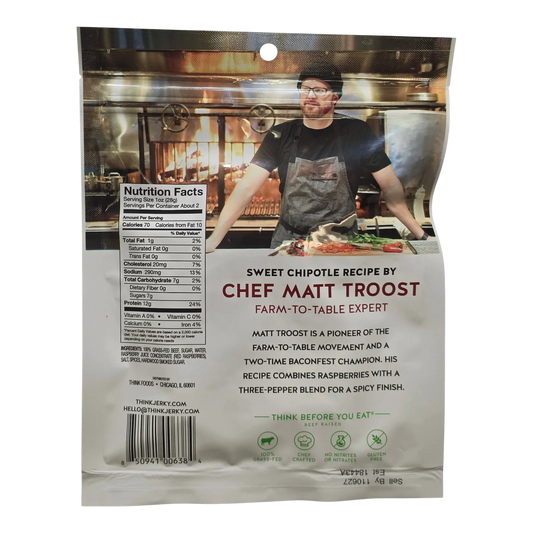
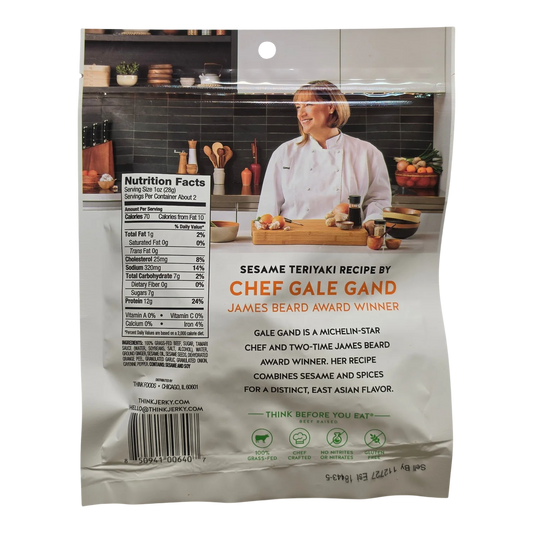
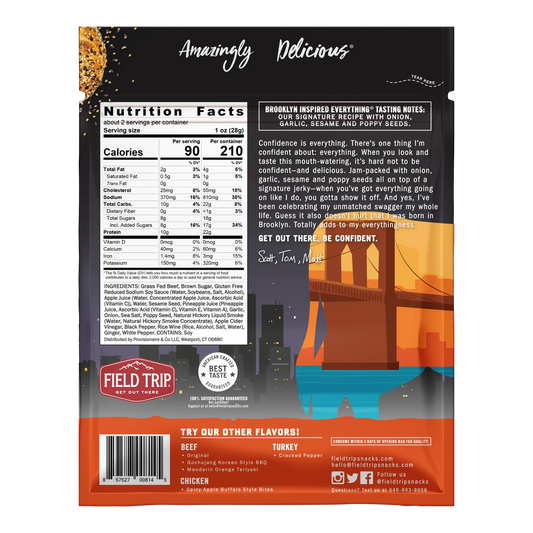
This collection brings together independent jerky makers who each take a different approach to beef sourcing, preparation, flavor, and texture. Stryve focuses specifically on grass-fed, air-dried beef biltong, while Think Jerky and Jerky’s Gourmet lean into more experimental, chef-inspired flavor combinations. Other brands featured throughout the collection, including Field Trip, Krave, Prevail Jerky, and Cattaneo Bros, bring their own take on cuts, seasoning philosophy, and preparation style to the grass-fed category. Because sourcing details and ingredient philosophy differ from one producer to the next, treat each brand's claims as specific to that brand rather than assuming one sourcing standard applies across the entire collection. Browse the full lineup below to compare how each brand's grass-fed recipes stack up.
Grass-Fed Jerky for Every Occasion
The same traits that make grass-fed jerky appealing on its own also make it useful in specific everyday situations.
Hiking and Camping
Lightweight and shelf-stable, grass-fed jerky earns its spot in a backpack without needing a cooler, which matters on a multi-day trip.
Road Trips and Travel
Jerky requires no refrigeration or prep, making it an easy alternative to gas station snacks when you want to keep a road trip menu simple.
Work and Office Snacking
A bag in a desk drawer covers the mid-afternoon slump without a trip to the vending machine, and it lasts for weeks without refrigeration.
Fitness and Active Lifestyles
Protein-focused and easy to carry, grass-fed jerky works well as a before-or-after workout snack for anyone who wants protein without a shaker bottle or a cooler bag.
Everyday Snacking
Not every grass-fed jerky moment needs a specific occasion behind it. Toss a bag into a lunch box or a backpack, and it is there the next time hunger hits between meals.
Shop Grass-Fed Jerky From JerkyBrands
From grass-fed to grass-finished beef, air-dried to traditionally prepared, and from simple peppered flavors to chef-inspired blends, this collection covers a wide range for shoppers who want a premium meat snack with real sourcing behind it. Compare products based on the specific nutrition panel and ingredient list in front of you rather than assuming every grass-fed bag behaves the same way, and once you find the ones you like, set up a subscription to save 10% on every future order. Shop the full grass-fed jerky collection now and start building a snack drawer sourced the way you actually want it.