

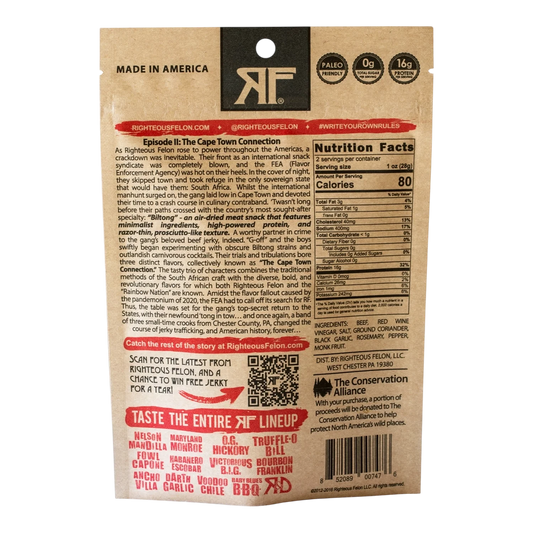


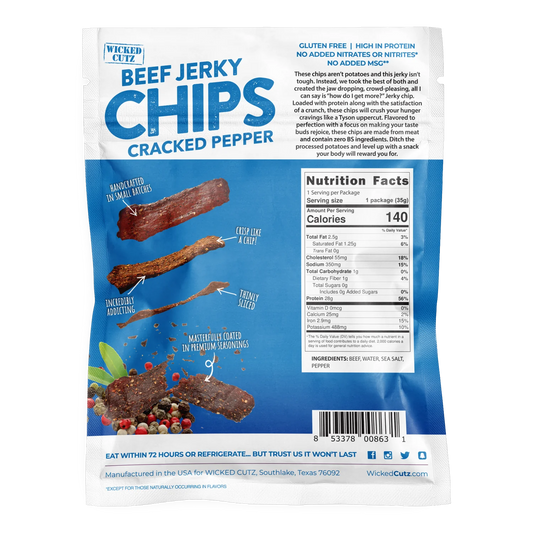

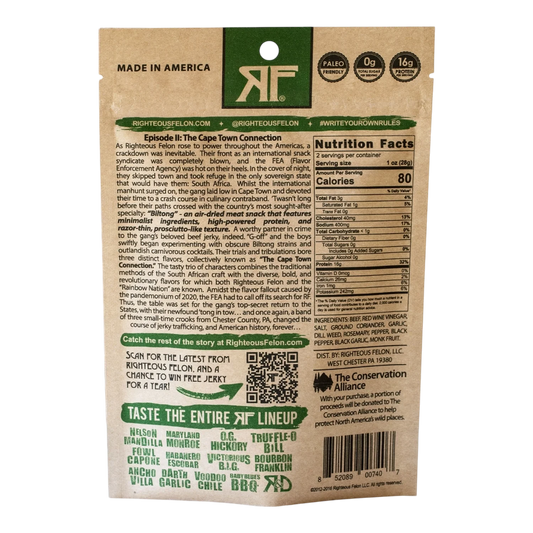

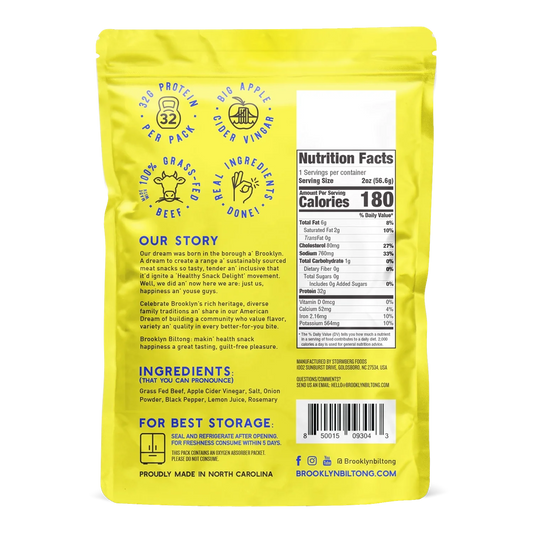

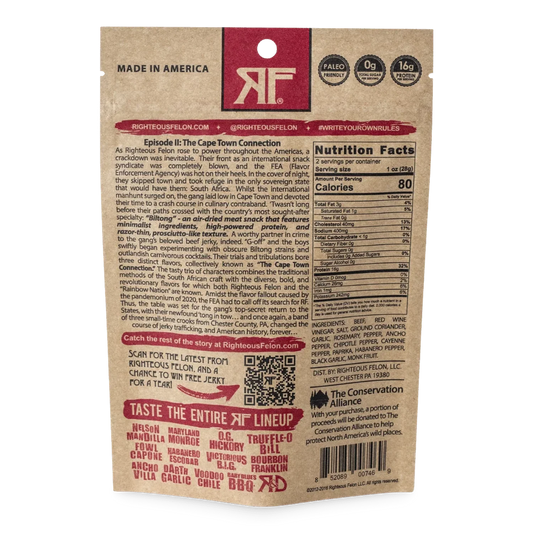


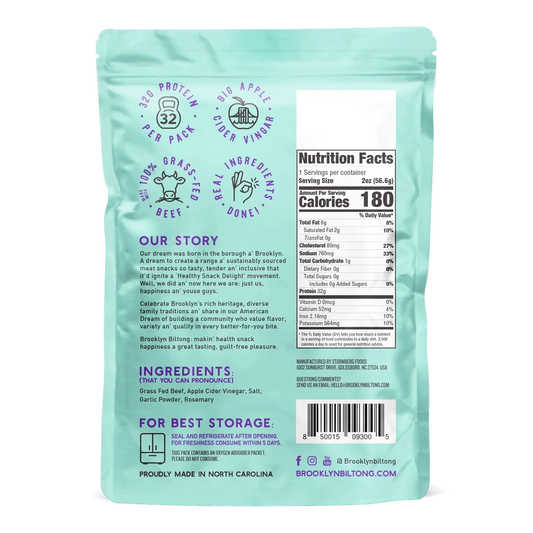


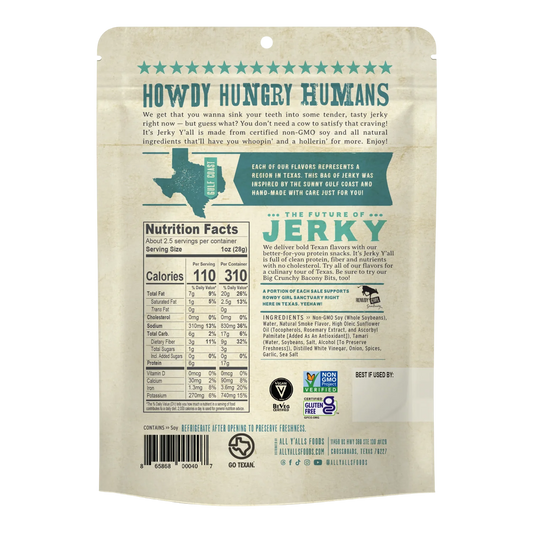


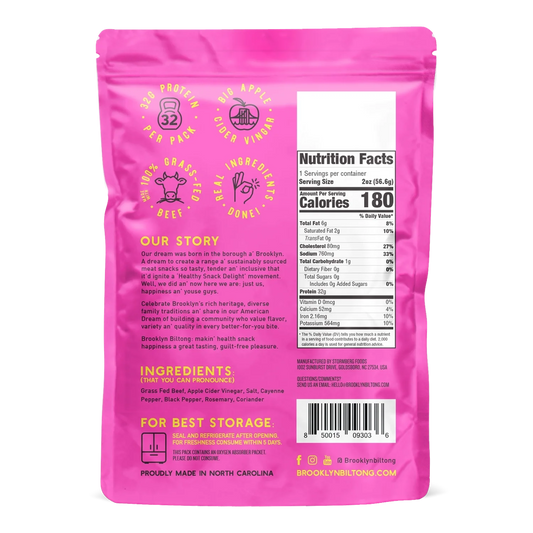

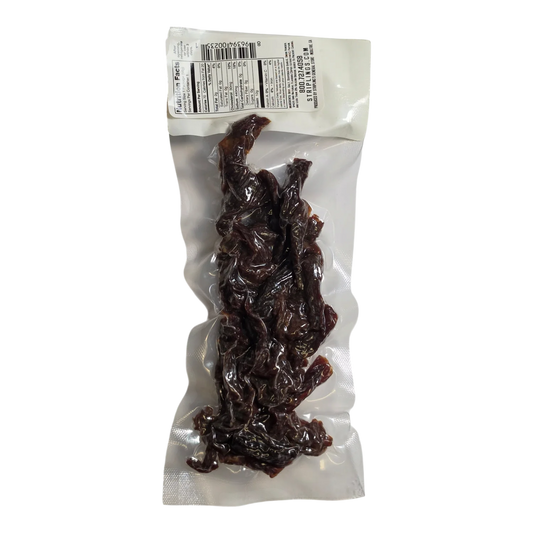

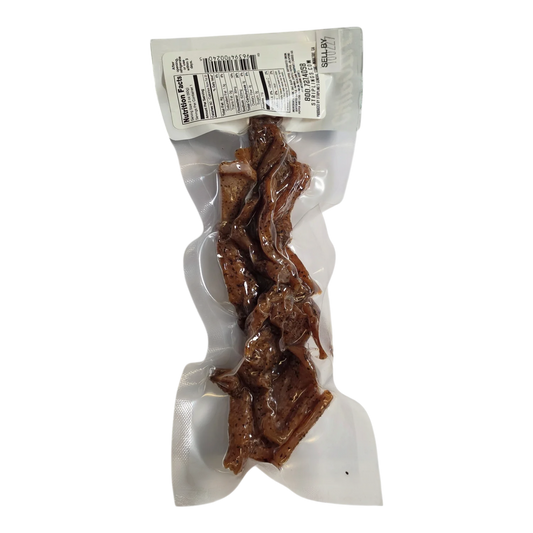

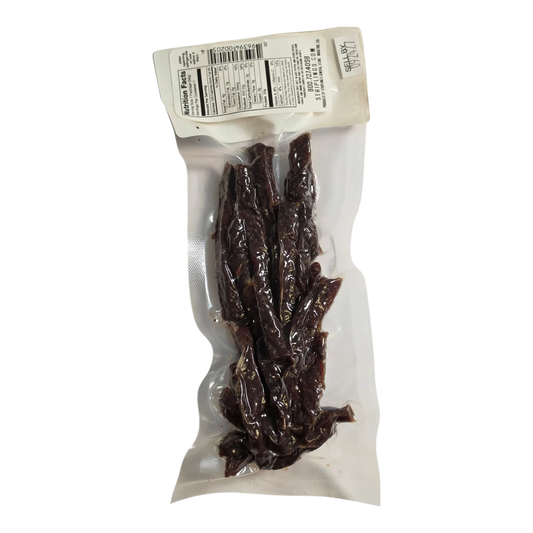


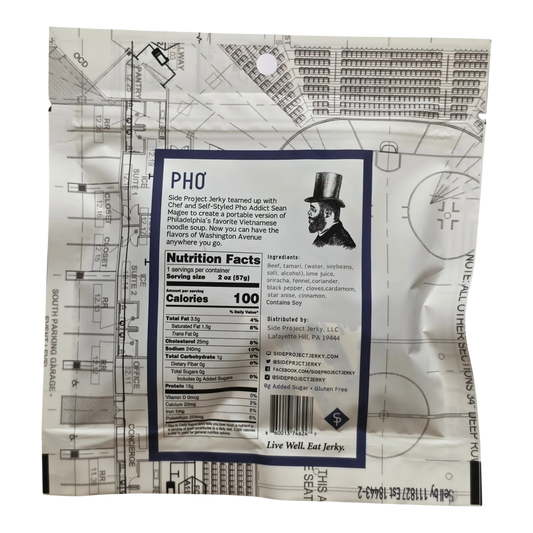

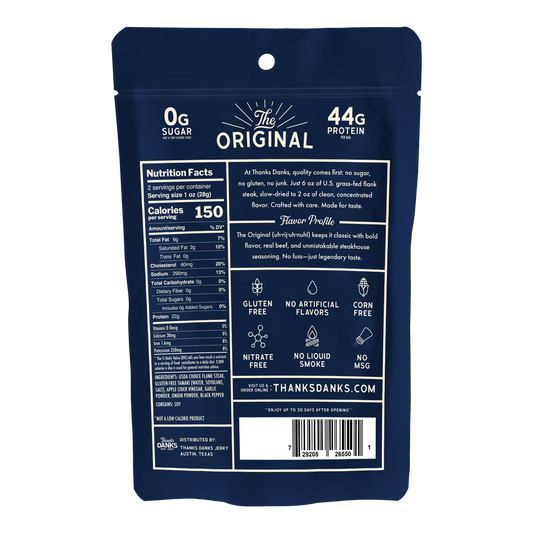


Cutting carbs doesn’t mean giving up snacks with real flavor, and that’s exactly why keto jerky earns its spot in the snack rotation. It is dried, seasoned meat with the moisture pulled out and the protein left behind, making it one of the easiest grab-and-go options for anyone following a ketogenic or low-carb diet. At JerkyBrands, we have gathered keto-friendly jerky, low-carb jerky, zero-sugar jerky, and low-sugar jerky from independent brands like Stryve, Brooklyn Biltong, and Thanks Danks into a single collection, so you’re not stuck squinting at three bags of teriyaki-glazed jerky at a gas station and hoping one of them will fit your macros. JerkyBrands doesn’t make any jerky itself; we find the best small brands and put them in one place. Nutritional values still vary by product and brand, since every maker builds its own marinade and cure, so it’s worth checking the label on whatever you pick up rather than assuming every bag labeled "jerky" plays by the same rules.
Shop Low-Carb Keto Jerky Online
This collection brings together a wide range of meats, brands, flavors, and textures from independent jerky makers who would otherwise sell only through their own sites. Shopping one collection instead of a dozen brand websites means comparing keto-friendly products side by side in a single cart, instead of bouncing between tabs trying to remember which brand had the lowest carb count.
You’ll find low-carb options across beef, pork, biltong, and even plant-based jerky here, chosen because their ingredient lists lean on meat, vinegar, salt, and spice rather than sweet marinades, not just because they carry the word "keto" on the front of the bag. Protein and carb counts still differ from brand to brand, so check the label. Set up a subscription on the products you keep reordering, and you’ll save 10% on every future shipment, so the jerky that actually fits your diet gets a little cheaper every time it lands on your doorstep.
What Makes Jerky Keto-Friendly?
Not every bag on a shelf labeled "jerky" belongs on a keto grocery list. A handful of specific traits separate the ones that do from the ones that quietly wreck a day of careful eating.
Low in Carbohydrates
Carbohydrate content matters more on a ketogenic diet than on almost any other eating pattern, since the diet works by keeping carbs low enough that the body shifts to burning fat for fuel instead of glucose. According to Harvard T.H. Chan School of Public Health's Nutrition Source, a standard ketogenic diet typically limits total carbohydrate intake to under 50 grams a day, and some versions run as tight as 20 grams, which is less carbohydrate than a single plain bagel contains. That kind of ceiling leaves very little room for error, and it’s exactly where jerky can go wrong. Marinades and seasoning blends built around brown sugar, honey, or teriyaki sauce can add several grams of carbohydrate per serving, even when the base ingredient is lean, unseasoned meat. Checking total carbohydrates per serving, not just glancing at the front-of-bag marketing, is the only reliable way to know whether a specific product actually fits.
Low or No Added Sugar
Added sugar is often the real culprit behind jerky that looks keto-friendly but isn't. Traditional recipes built around sweet glazes, honey cures, or teriyaki marinades can carry a meaningful amount of sugar per serving, which adds up fast within a 20-to-50-gram daily carb budget. This collection includes a number of zero-sugar and low-sugar options made without those sweet marinades, so shoppers tracking every gram have less guesswork, though the sugar line on each label is still the final word.
Protein
Jerky starts as lean meat, and drying it out concentrates the protein instead of diluting it, which is a large part of why it works so well as a keto snack. Protein per serving varies with the cut, the brand, and the serving size, so check the label rather than assuming. On a ketogenic diet, protein sits in a middle ground, and how much you want from a snack depends on your own plan. That balance is one reason jerky tends to fit more naturally into a keto eating pattern than a protein bar loaded with sugar alcohols and binders.
Keto-Friendly Ingredients
Beyond the nutrition panel, the ingredient list itself tells you a lot about whether a jerky belongs in a low-carb rotation. Meat, salt, and a straightforward spice blend are about as keto-friendly as an ingredient list gets. Sweeteners, fruit purees, and thick glazes are the ingredients to watch for, since they can sneak carbohydrate grams into a product that otherwise looks like a clean, high-protein snack. Reviewing the full ingredient list, rather than stopping at the nutrition facts panel, catches details that grams-per-serving numbers alone can miss.
Keto and Low-Carb Jerky Nutrition
Two bags of jerky can carry meaningfully different numbers once you flip them over, and on keto, that difference matters more than usual.
Protein Content
Protein per serving is the number most keto shoppers check first, and it’s worth comparing across brands rather than assuming they’re all roughly equal. Serving sizes differ, which can make a lower-protein product look more competitive than it actually is if you only glance at the front of the package.
Carbohydrates
Total carbohydrates per serving determines whether a product fits into a tight daily budget or blows it all on one snack. Note which products are built around minimal seasoning and tend to land on the low end, and which carry sweet marinades and can have several times the carbohydrate count of a plain or peppered recipe.
Sugar
Added sugar and naturally occurring sugar aren’t the same, and nutrition labels increasingly separate the two. According to the U.S. Food and Drug Administration, added sugars are those added during processing rather than occurring naturally in the food itself. On keto, every gram of added sugar counts against a daily carbohydrate ceiling, and zero-sugar jerky exists specifically for shoppers who want to remove that variable from the equation entirely.
Sodium
Jerky can vary considerably in sodium from one brand to the next, and that variation has nothing to do with whether a product is keto-friendly. The FDA's label guidance treats 5% of the Daily Value or less as low in a given nutrient and 20% or more as high, based on a 2,300 milligram daily value for sodium, which gives you a fast way to compare two products side by side rather than guessing from taste alone. If salt is the number you watch most closely, the low-sodium jerky collection is the better place to start.
Calories and Fat
Calories and fat vary with the cut of meat, the recipe, and how the product was prepared, so a leaner cut isn't automatically the better keto choice if fat is part of your macro target. Considering the full nutrition panel together, rather than fixating on a single number, gives a clearer picture than any one metric on its own.
Types of Keto Jerky
Beef gets most of the attention in this category, but it’s far from the only low-carb option worth exploring.
Keto Beef Jerky
Beef jerky remains the anchor of the keto jerky world, and for good reason. Lean cuts trimmed before drying deliver a dense, satisfying chew that holds up against almost anything else in the snack aisle. Within this collection of low-sugar and zero-sugar beef jerky, you’ll find original, peppered, smoky, and spicy beef recipes from brands like Thanks Danks, Stripling's, and Jerky Junction, so keeping carbs low doesn’t mean settling for bland.
Keto Chicken Jerky
Chicken jerky is the pick for shoppers who want a leaner alternative to beef without giving up the format. The keto collection currently centers on beef, pork, and biltong, so browse the chicken jerky collection for buffalo and other savory profiles, and check the carb and sugar lines on each label before adding one to a keto plan.
Keto Pork and Bacon Jerky
Pork and bacon jerky bring a richer, sometimes smokier character to the category. The pork in this collection, like Stripling's chipotle pork jerky, is dry-rubbed and smoked in a smokehouse with no sugar on the ingredient list, and the texture tends to be a bit more tender than beef. Bacon jerky is a different story: most bacon is cured with sugar or finished with a sweet glaze, so none is carried in this collection, and any bacon jerky you consider for keto deserves a close read of the sugar line first.
Keto Biltong
Biltong is an air-dried meat snack that originated in Southern Africa, and it differs from traditional jerky in a few specific ways. Biltong is typically cured with vinegar and dried over several days rather than heated like jerky, and it’s rarely smoked. That preparation method often means a shorter, more straightforward ingredient list built around salt, vinegar, and a coriander-forward spice blend, which is part of why biltong from brands like Brooklyn Biltong, Righteous Felon, and Stryve regularly shows up on keto shopping lists.
Keto-Friendly Specialty Jerky
Crunchy beef jerky chips, bite-sized steak bites, and even a plant-based soy jerky round out the collection for shoppers who have already worked through the basics and want to explore further. As with every category here, checking the individual nutrition label and ingredient list still matters more than the meat type printed on the front of the bag.
Keto Jerky Flavors
Fitting a diet is only half the equation. These flavor families show up most across the keto-friendly side of the collection.
Original Keto Jerky
Simple, meat-forward flavors with minimal seasoning tend to have the fewest hidden carbohydrates, making original recipes a safe default when you’re not sure what else to grab.
Spicy Keto Jerky
Pepper, chili, habanero, and chipotle varieties bring real heat without leaning on sugary sauces, at least in the recipes built specifically for low-carb shoppers. Bold flavor and a tight carb count aren’t mutually exclusive here, and the wider spicy beef jerky collection has more heat levels to compare.
Garlic and Herb Keto Jerky
Savory seasoning blends built around garlic, herbs, and spice rather than sugar give shoppers who want to avoid sweet flavors an easy category to browse without checking every label from scratch, and the garlic beef jerky collection gathers more of them in one place.
Smoky Keto Jerky
Hickory and other smoky flavors carry a distinct depth, though it pays to read how the smoke got there: Stripling's hickory jerky spends hours in a smokehouse, while Stryve's hickory and Jerky Junction's cowboy jerky get their flavor from natural hickory smoke flavor. Barbecue-style products in particular are worth a closer look at the sugar line, since traditional barbecue sauce leans heavily on brown sugar and molasses.
Zero-Sugar Keto Jerky
This flavor family is for shoppers tracking every gram of carbohydrate closely. Products like Stryve's air-dried beef, Thanks Danks steak jerky, and Jerky Junction's zero-sugar cowboy jerky are formulated without added sugar, removing one of the biggest variables that can knock an otherwise reasonable jerky off a strict keto plan.
How to Choose the Best Low-Sugar Jerky
Flavor and meat type are only part of the decision. These five checkpoints cover what actually separates a truly keto-friendly bag from one that uses the word for marketing purposes.
Check Total Carbohydrates
Compare carbs per serving across brands, and pay attention to serving size. A product with a smaller stated serving can look more competitive on paper without actually delivering fewer carbohydrates ounce for ounce.
Look for Added Sugar
Check both the nutrition facts panel and the ingredient list, since sugar, syrups, honey, and sweet marinades can show up in the ingredients even when the sugar line on the label looks modest. Reading both together gives a more complete picture than either one alone.
Compare Protein
Look for a protein count that matches your dietary goals, rather than assuming every jerky delivers roughly the same amount. The range across brands is wider than it first appears.
Review Ingredients
Identify sweeteners, fillers, sauces, and seasonings, and weigh them against your keto preferences. Some shoppers are comfortable with a small amount of natural sweetness from a marinade; others want the shortest ingredient list possible. Neither approach is wrong, but knowing which one you want makes label reading faster. Cures are worth a glance too: several brands here state no nitrates or nitrites added except those naturally occurring in celery powder and sea salt, which is the line to read rather than relying on the word "uncured" on the front.
Consider Sodium
Compare sodium levels between products rather than assuming every keto jerky lands in the same range, since sodium swings by brand and recipe just as much as it does across the wider jerky category. A product being keto-friendly says nothing about how much sodium it carries.
Keto Jerky for Different Occasions
It’s not always easy to find a suitable on-the-go snack that also fits a ketogenic diet. Here’s where keto jerky comes in to save the day.
For Work
A bag in a desk drawer is a portable, no-prep option for the afternoon slump, especially compared with whatever carb-heavy snacks sit in the office vending machine.
For Hiking and Camping
Lightweight and shelf-stable, an unopened bag of jerky earns its spot in a backpack without needing a cooler, which matters more on a multi-day trip. Unopened, keep it in a cool, dry place and use it by the best-by date on the bag; once a bag is open, reseal it, refrigerate it, and finish it within 3 days.
For Travel and Road Trips
Jerky travels well because it doesn’t melt, an unopened bag doesn’t need to stay cold, and it beats reaching for a bag of chips at a gas station when you’re trying to stay in a low-carb range on the road.
For the Gym
Easy to carry and shelf-stable until opened, jerky fits in a gym bag without the prep or refrigeration many other savory snacks require.
For Everyday Snacking
Not every keto jerky moment needs a specific occasion. Toss a bag into a lunch box or a bag, and it is there the next time you want a portion-conscious snack that won’t throw off your macros for the day.
Keto-Friendly Jerky Brands
This collection features independent jerky makers, including Stryve, Brooklyn Biltong, Righteous Felon, Stripling's, Thanks Danks, Jerky Junction, Wicked Cutz, Side Project Jerky, VP Jerky, and All Y'alls Foods, each bringing a different take on meat selection, carb content, sugar content, flavor profile, and preparation method. JerkyBrands doesn’t make any of it; we track down the brands worth carrying and put them in one place so you can compare them. Comparing several brands side by side, in one cart, is a faster way to find the ones that consistently fit your specific keto targets than guessing based on packaging claims alone. Browse the full lineup below to see how each brand's recipes stack up.
Keto Jerky vs. Regular Jerky
The biggest difference between the two usually comes down to sugar. Regular jerky, especially teriyaki, honey-cured, or barbecue-glazed recipes, often carries significantly more sugar and carbohydrates than a plain or peppered version, and that difference comes almost entirely from the marinade. Traditional jerky isn’t automatically disqualified from a keto plan, but it is also not automatically keto-friendly just because it’s jerky. The label, not the product name, tells you whether a specific bag fits. A jerky marketed as "original" from one brand might carry noticeably different carb and sugar numbers than a differently seasoned "original" from another, which is exactly why checking the nutrition panel on every new product beats assuming based on past experience with a similar-sounding item.
More Keto Jerky Flavors
Shoppers who land here often overlap with the paleo jerky and grass-fed jerky collections, which share many of the same short-ingredient-list brands, and the low-sodium jerky collection covers the other number keto eaters tend to watch. If you’re buying for someone who isn’t counting carbs, the teriyaki beef jerky collection sits at the opposite end of the sugar spectrum.
Shop Keto Low-Carb Jerky From JerkyBrands
With low-carb, low-sugar, and zero-sugar options; a wide range of brands and meats; and flavors built to fit an actual keto target rather than just borrow the word, this collection covers a lot of ground for people trying to snack well without breaking a carb budget. Compare products based on your own numbers rather than assuming every bag labeled "keto" behaves the same way, and once you find the ones that fit, set up a subscription to save 10% on every reorder. Shop the full keto jerky collection now and start building a snack drawer that works with your diet, not against it.
